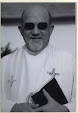
Dr. Marcus Borg
Hundere Professor of Religion and Culture
Oregon State University
Corvallis, Oregon
So what does it mean to stand up for Jesus? What does it mean to jump up and down for Jesus? What does it mean to take him seriously? What does it mean to follow him?
Drawing upon my study of the historical Jesus, of the Pre-Easter Jesus, it seems to me that a life that takes Jesus seriously would have two primary focal points, and that is what I want to talk about today.
The first of these focal points of the Christian life is a life deeply centered in God, deeply centered in the Spirit. God or the Spirit was at the very center of Jesus' own life.
In my historical work, I speak of Jesus as a Jewish mystic, and I see this as foundational to everything else that he was. Now, what I mean by the word "mystic" is actually quite simple. Mystics are people, and they are known in every culture that we know anything about; mystics are people who have vivid and typically frequent experiences of God or the sacred or the Spirit--terms, which I use synonymously and interchangeably.
The Jewish tradition before Jesus is full of such people. According to the stories told about them, Abraham, Jacob, Moses, the prophets of Ancient Israel, all of these were people for whom God or the sacred was an experiential reality. These people did not simply believe strongly in God, they knew God. And once one takes seriously that there really are people like this, then it seems clear to me that whatever else we say about Jesus, we need to say that he was one of these--one who knew God in his own experience.
If we take Jesus seriously as a Jewish mystic, it also affects how we think about God or the sacred. It means that we need to think about God not as a person-like being out there separate from the universe, a long ways away, not here. But, it means we need to think of God or the sacred as the encompassing Spirit that is all around us, and that is separated from us only by the membranes of our own consciousness. A mystic like Jesus is one in whom those membranes of consciousness become very thin, and one experiences God or the sacred. Jesus invited his followers to a relationship to the same Spirit, the same God that he knew in his own experience.
How do we become centered in the Spirit of God? How do we actually experience what Jesus experienced? Well, the Gospels of the New Testament have many ways of talking about that, about The Way or The Path. One of the central images for The Way or The Path is what the journey of Lent itself is about.
The journey of Lent is about journeying with Jesus from Galilee to Jerusalem-- which is the place of endings as well as beginnings, the place of death and resurrection. It is the place where, to use an old word play, the tomb becomes a womb.
That journey of Jesus from Galilee to Jerusalem is at the very center of the Synoptic Gospels of Matthew, Mark and Luke. We see it, perhaps, with greatest clarity in the great central section of Mark's Gospel. Three times in that great central section, which runs from Mark 8:27 through the end of Chapter 10, Jesus speaks of his own impending death and resurrection in Jerusalem. He says, "The Son of Man must go to Jerusalem and suffer many things. The authorities will seize him and mock him and scourge him and put him to death, and on the third day he will rise again." After each of those three predictions of the Passion, as they are called, Jesus speaks of following after him, of following him on that path of death and resurrection.
Lent is about precisely that journey. Lent is about mortality and transformation. We begin the season of Lent on Ash Wednesday with the sign of the cross smeared on our foreheads with ashes as the words are spoken over us, "Dust thou art, and to dust thou wilt return."
We begin this season of Lent not only reminded of our death, but also marked for death. The Lenten journey, with its climax in Holy Week and Good Friday and Easter, is about participating in the death and resurrection of Jesus. Put somewhat abstractly, this means dying to an old identity--the identity conferred by culture, by tradition, by parents, perhaps--and being born into a new identity--an identity centered in the Spirit of God. It means dying to an old way of being, and being born into a new way of being, a way of being centered once again in God.
Put slightly more concretely, this path of death and resurrection, of radical centering in God, may mean for some of us that we need to die to specific things in our lives--perhaps to a behavior or a pattern of behavior that has become destructive or dysfunctional; perhaps to a relationship that has ended or gone bad; perhaps to an unresolved grief that needs to be let go of; perhaps to a career or job that has either been taken from us or that no longer nourishes us; or perhaps even we need to die to a deadness in our lives.
You can even die to deadness, and this dying is also oftentimes a daily rhythm in our lives--that daily occurrence that happens to some of us as we remind ourselves of the reality of God in our relationship to God; that reminder that can take us out of ourselves, lift us out of our confinement, take away our feeling of being burdened and weighed down.
So, that's the first focal point of a life that takes Jesus seriously: that radical centering in the Spirit of God that is at the very center of the Christian life. Now, this radical centering in God does not leave us unchanged. It transforms us, and this leads us to the second focal point of what it means to follow Jesus, what it means to take Jesus seriously.
In a single sentence, it means compassion in the world of the every day. Slightly more fully, it means a life of compassion and a passion for justice. I need both of these words, compassion and justice, for compassion without justice easily gets individualized or sentimentalized, and justice without compassion easily sounds like politics.
Compassion is utterly central to the teaching of Jesus. As those of you who have read one or more of my books on Jesus know, I see it as the core value, the ethical paradigm of the life of faithfulness to God, as we see it in Jesus. Jesus sums up theology and ethics in a very short saying (six words in English). It is found in Luke 6:36 with a parallel in Matthew 5:48. "Therefore [very early Q material for those of you who like to know things like that], be compassionate as God is compassionate." The word for compassionate in both Hebrew and Aramaic is related to the word for womb. Thus, to be compassionate is to be womb-like, to be like a womb. God is womb-like, Jesus says, therefore, you be womb-like.
What does it mean to be womb-like? Well, it means to be life-giving, nourishing. It means to feel what a mother feels for the children of her womb: tenderness, willing their well-being, finding her children precious and beautiful. It can also mean a fierceness, for a mother can be fierce when she sees the children of her womb being threatened or treated destructively. Compassion is not just a soft, woosy virtue. It can have passion and fierceness to it as well.
To speak of compassion as the core value of the Christian life may seem like old hat to us, like ho-hum. But, contrasted for a moment to what some Christians have thought the Christian life is most centrally about, that it is really about righteousness--keeping your moral shirt-tails clean, avoiding being stained by the world--in that sense, the Christian life is profoundly different from compassion. In many ways, compassion is virtually the opposite of righteousness in that sense. Jesus, as a person, was filled with compassion, and he calls us to compassion.
Jesus was also filled with a passion for justice. This is probably the least understood part of the teaching of Jesus in the modern American church, and maybe throughout most of the church's history. It's because we often misunderstand what the word justice means or we understand it poorly. We sometimes think that justice has to do with punishment, with people getting what is coming to them for what they have done wrong. When we think that way, then we think that the opposite of justice is mercy. But in the Bible, the opposite of justice is not mercy; the opposite of justice is injustice.
Justice and injustice have to do with the way societies are structured, with the way political and economic systems are put together. Like the Hebrew social prophets before him, Jesus' passion for justice set him against the domination system of his world and his time. It set him against a politically oppressive and economically exploitative system that had been designed by wealthy and powerful elites, legitimated by religion, and designed by them in their own narrow self-interests. And the domination system of his time, like the domination systems of all time, had devastating effects on the lives of peasants.
Also, like the Hebrew social prophets, Jesus was a God-intoxicated voice of peasant-religious-social protests, not just protests against the domination system, but an advocate of God's justice. God's justice is about social justice. God's justice is about the equitable distribution of God's earth, and a passion for God's justice sets you against all of those systems designed by people in their own narrow self-interests to benefit the few at the expense of the many.
Indeed, it was Jesus' passion for justice that got him killed. That is why the authorities, the powers that be, executed him. The journey of Lent reminds us of that, too: that Jesus was killed; he didn't simply die.
In the 13th chapter of Luke, some Pharisees come to Jesus to warn him that Herod is planning to kill him. Jesus replies, "Go and tell that fox Herod [fox in the world of the Jewish homeland in the first century did not mean a sly, cunning, wily creature; it had more the connotation of skunk, go and tell that skunk Herod], that it cannot be that a prophet should perish outside of Jerusalem." Then he speaks of Jerusalem. "Jerusalem, the one who kills the prophets, and stones those who are sent to you." It is Jerusalem, of course, not as the center of Judaism, but Jerusalem as the center of the native domination system, of that economically exploitative and politically oppressive system that radically impoverished peasants and drove them to an existence of destitution and even desperation. Jesus is killed because of his passionate criticism of that system and his advocacy of the Kingdom of God. Which is what life would be like on Earth if God were King and the domination systems of this world were not. This is the political meaning of Good Friday.
To connect this back to compassion, justice is the social form of compassion. Justice and compassion are not opposites or different things, but justice is the social and political form of caring for the least of these. If we take Jesus seriously, we are called to both compassion and justice.
To move to my conclusion, following Jesus--the journey of Lent--means a radical centering in God in which our own well-being resides, re-connecting to a center of meaning and purpose and energy in our lives. It means a passion for compassion and justice in the world of the every day. The Gospel of Jesus is ultimately very simple. There is nothing complicated about this at all. It's taking seriously your relationship to God and taking seriously caring what God cares about in the world.
The Gospel invites us to stand up for Jesus, to take Jesus seriously, even to jump up and down for Jesus. If we are not there yet, if the moving of the Spirit in our hearts is but yet a faint stirring, then we are invited to sing along in silence. Even the songs that we sing in silence shape our lives.
Amen.
Copyright 2001 Dr. Marcus Borg
Sunday, July 1, 2007

Tuesday, June 26, 2007
Born Again - A New Start
FROM CHAPTER SIX: BORN AGAIN - A NEW HEART
Born Again: The Process
The born-again experience can be sudden and dramatic. It can involve a dramatic revelation, a life-changing epiphany, as in the case of Saul on the road to Damascus, an experience through which he became Paul. Such dramatic conversions continue to this day; some people can name a day or even an hour when it happened. There is no reason to doubt that such "sudden conversions" occur. William James not only reports many such experiences, but speaks of them as one of the most remarkable psychological phenomena known.26
But for the majority of us, being born again is not a single intense experience, but a gradual and incremental process. Dying to an old identity and being born into a new identity, dying to an old way of being and living into a new way of being, is a process that continues through a lifetime. The Christian life as it matures is ever more deeply centered in the Spirit--that is, centered in the Spirit of God as known in Jesus, the Spirit of Christ.
For most of us, this takes time. And even for those who can name an hour when they were born again, the process of living into the new life takes time. Of course, progress is not automatic; one can thwart it, obstruct it, impede it. But in the Christian life, aging, if not interfered with, has a way of deepening our centering in the Spirit. The messages and lures of youth and middle age are muted; we can rest more and more in God, more easily be in silence with God. And by being more centered in God, our lives are transformed. As the Christian life matures, we begin to experience the self-forgetfulness that accompanies a deepening trust in God.
The born-again metaphor not only applies to a single dramatic event or a lifelong process, but also to shorter rhythms in our lives. It is a process that may occur several times in periods of major transition, whatever the cause.
It even applies to the micro-rhythms of daily life. Martin Luther, a major spiritual mentor in my childhood, spoke of "daily dying and rising with Christ" and, in language that sounds a bit archaic, of "daily putting to death the old Adam," the old self in us. By adding "daily," Luther echoes the gospel of Luke.
The "dailiness" of the process fits my experience, as it does that of many people I know. In the course of a day, I sometimes realize that I have become burdened, and that the cause is that I have forgotten God. In the act of remembering God, of reminding myself of the reality of God, I sometimes feel a lightness of being--a rising out of my self-preoccupation and burdensome confinement. We are called again and again to come forth from our tombs.
This process is at the heart not only of Christianity, but of the other enduring religions of the world. The image of following "the way" is common in Judaism, and "the way" involves a new heart, a new self centered in God. One of the meanings of the word "Islam" is "surrender": to surrender one's life to God by radically centering in God. And Muhammad is reported to have said, "Die before you die." Die spiritually before you die physically, die metaphorically (and really) before you die literally. At the heart of the Buddhist path is "letting go"--the same internal path as dying to an old way of being and being born into a new. According to the Tao te Ching, a foundational text for both Taoism and Zen Buddhism, Lao Tzu said: "If you want to become full, let yourself be empty; if you want to be reborn, let yourself die."
This process of personal spiritual transformation--what we as Christians call being born again, dying and rising with Christ, life in the Spirit--is thus central to the world's religions. To relate this to John's affirmation that Jesus is "the way": the way that Jesus incarnated is a universal way, not an exclusive way. Jesus is the embodiment, the incarnation, of the path of transformation known in the religions that have stood the test of time.
Seeing this commonality between the way of Jesus and the ways of the world's religions is sometimes disconcerting to Christians, given our history of "Jesus is the only way." But the commonality is cause for celebration, not consternation. Not only does it mean, to echo an exclamation in the book of Acts, the Spirit has gone out to Muslims, Buddhists, Jews, Hindus, and so forth, but it also adds credibility to Christianity.27 When the Christian path is seen as utterly unique, it is suspect. But when Jesus is seen as the incarnation of a path universally spoken about elsewhere, the path we see in him has great credibility.
Born Again: Intentionality
Being born again is the work of the Spirit. Whether it happens suddenly or gradually, we can't make it happen, either by strong desire and determination or by learning and believing the right beliefs. But we can be intentional about being born again. Though we can't make it happen, we can midwife the process. This is the purpose of spirituality: to help birth the new self and nourish the new life. Spirituality is midwifery.
Spirituality combines awareness, intention, and practice. I define it as becoming conscious of and intentional about a deepening relationship with God. The words are very carefully chosen. Becoming conscious of our relationship with God: I am convinced that we are all already in relationship to God and have been from our birth. God is in relationship with us: spirituality is about becoming aware of a relationship that already exists.
Becoming intentional about our relationship with God: spirituality is about paying attention to the relationship. Though God is "Mystery," there is nothing mysterious about paying attention to our relationship with God. We do so in the ways we pay attention in a human relationship: by spending time in it, attending to it, being thoughtful about it. We pay attention to our relationship with God through practice, both corporate and individual: worship, community, prayer, scripture, devotion. About practice, I will say more in Chapter 10.
A deepening relationship with God: in what is now a familiar theme, the Christian life is not very much about believing a set of beliefs, but about a deepening relationship with the one in whom we live and move and have our being. Paying attention to this relationship transforms us. This is what our lives are to be about: a transforming relationship to "what is," "the More."
In short, spirituality is about the process of being born again (and again and again). It is at the heart of the Christian life. If we as Christians and as the church took this seriously, we would recover the rich spiritual practices of the Christian tradition. We would learn them and encourage their use. One of the central purposes of our life together as church would be to midwife and nourish the process of being born again.
And this is happening. The recovery of spirituality and spiritual practices in mainline churches in our time is an encouraging sign of the revitalization of Christianity. It is also a sign of the emerging paradigm with its emphasis on a more relational and experiential understanding of faith and the Christian life.
FOOTNOTES
26 William James, The Varieties of Religious Experience, lecture 10.
27 The passage is Acts 10:45:They "were astounded that the gift of the Holy Spirit had been poured out even on the Gentiles," that is, to those who were not of the chosen people. See Acts 11:18.
The New Life
Being born again begins a new life. Indeed, newness is its defining characteristic. It is most dramatically experienced and celebrated by those who thought their lives were irredeemably lost, whether prisoners incarcerated for brutal crimes or a slave trader like John Newton author of "Amazing Grace." The image of being "born again," born of the grace and Spirit of God, is full of hope, of new beginning in the midst of what seems like ending. Always grace and rebirth are possible.
And it is entry into a different kind of life. Dying and rising has consequences. It does not leave us unchanged. It is a transformation that begins a process of continuing transformation sometimes called "sanctification." The New Testament constantly speaks of the new life. As it does so, it is both rhapsodic and realistic. Its realistic treatment can be attested by the fact that the gospels, letters, and book of Revelation all offer explicit or implicit evidence of problems in early Christian communities.
But it is the rhapsodic aspect that I wish to highlight: what the new life is like. It is enormously attractive. It is the life of reconnection with God. It is the life of the returned prodigal, welcomed home from exile; the life of the healed demoniac, restored to his right mind and to community; the life of the bent woman, standing up and restored to health; the life of the woman of the city, redeemed by her love, the life of Lazarus, raised from the dead.
Paul speaks of the new life "in Christ" in the most extraordinary terms. It is marked by freedom, joy, peace, and love, four of his favorite words: freedom from the voices of all the would-be lords of our lives; the joy of the exuberant life; the peace of reconnection to what is, the peace that passes all understanding; and love--the love of God for us and the love of God in us. 28
Paul and the other authors of the New Testament consistently see these qualities as the "fruits" of the Spirit, as "gifts" of the Spirit. They are the fruit not of human striving, but of a new identity and new way of being--the fruit, the product, of centering one's life in God, in the Spirit.
Paul's most famous description of the new life is found in 1 Corinthians 13, often called Paul's "hymn to love." Its context between chapters 12 and 14 makes the connection to "the gifts of the Spirit" explicit. These gifts include prophecy, wisdom, healing, speaking in tongues, and the interpretation of tongues. Then in chapter 13, unfortunately often read in isolation from its context, Paul says about love in relation to the other gifts of the Spirit:
If I speak in the tongues of mortals and of angels, but do not have love, I am a noisy gong or a clanging symbol. And if I have prophetic powers, and understand all mysteries and all knowledge, and if I have all faith, so as to remove mountains, but do not have love, I am nothing. If I give away all my possessions, and if I hand over my body so that I may boast, but do not have love, I gain nothing. 29
The affirmation sounds again at the end of the chapter in Paul's memorable triad of faith, hope, and love: "And now faith, hope, and love abide, these three; and the greatest of these is love." For Paul, love is the primary gift of the Spirit, indeed the definitive gift.
The same is true for Jesus. For Jesus, the primary quality of a life centered in God is compassion. When Jesus sums up theology and ethics in a few words, he says: "Be compassionate as God is compassionate." 30 Where Paul uses the word "love," Jesus uses the word "compassion." The associations of the word in Aramaic and Hebrew are strikingly evocative: to be compassionate is to be "womblike": life-giving, nourishing, embracing. So God is; so we are to be.
Thus growth in love, growth in compassion, is the primary quality of life in the Spirit. It is also the primary criterion for distinguishing a genuine born-again experience from one that only appears to be one.
It is the pragmatic tests suggested by William James, quoting Jesus: "By their fruits you shall know them." The fruit is love. Indeed, such fruit is the purpose of Christian life.
FOOTNOTES
28 For an exceptionally clear exposition of Paul's vision of the Christian life as marked by freedom, joy, peace, and love, see Robin Scroggs, Paul for a New Day (Philadelphia: Fortress, 1977), pp. 21-38.
29 I Cor. 13:1-3.
30 Luke 6:36. Though most English translations of Luke 6:36 use the word "mercy," the context in Luke points to "compassion" as a better translation. "Mercy" in English suggests a situation of wrongdoing: we can show mercy toward those who have wronged us. But the context in Luke suggests generosity: love your enemies, do good, lend without expectation of return.
Excerpts from The Heart of Christianity ©2003 by Marcus J. Borg are used with permission from HarperSanFrancisco, a division of HarperCollins Publishers.
To purchase a copy of The Heart of Christianity,visit the non-profit bookstore Sacred Path Books & Art. This link is provided as a service to explorefaith.org visitors and registered users. Explorefaith.org receives no proceeds from the sales of The Heart of Christianity.
Born Again: The Process
The born-again experience can be sudden and dramatic. It can involve a dramatic revelation, a life-changing epiphany, as in the case of Saul on the road to Damascus, an experience through which he became Paul. Such dramatic conversions continue to this day; some people can name a day or even an hour when it happened. There is no reason to doubt that such "sudden conversions" occur. William James not only reports many such experiences, but speaks of them as one of the most remarkable psychological phenomena known.26
But for the majority of us, being born again is not a single intense experience, but a gradual and incremental process. Dying to an old identity and being born into a new identity, dying to an old way of being and living into a new way of being, is a process that continues through a lifetime. The Christian life as it matures is ever more deeply centered in the Spirit--that is, centered in the Spirit of God as known in Jesus, the Spirit of Christ.
For most of us, this takes time. And even for those who can name an hour when they were born again, the process of living into the new life takes time. Of course, progress is not automatic; one can thwart it, obstruct it, impede it. But in the Christian life, aging, if not interfered with, has a way of deepening our centering in the Spirit. The messages and lures of youth and middle age are muted; we can rest more and more in God, more easily be in silence with God. And by being more centered in God, our lives are transformed. As the Christian life matures, we begin to experience the self-forgetfulness that accompanies a deepening trust in God.
The born-again metaphor not only applies to a single dramatic event or a lifelong process, but also to shorter rhythms in our lives. It is a process that may occur several times in periods of major transition, whatever the cause.
It even applies to the micro-rhythms of daily life. Martin Luther, a major spiritual mentor in my childhood, spoke of "daily dying and rising with Christ" and, in language that sounds a bit archaic, of "daily putting to death the old Adam," the old self in us. By adding "daily," Luther echoes the gospel of Luke.
The "dailiness" of the process fits my experience, as it does that of many people I know. In the course of a day, I sometimes realize that I have become burdened, and that the cause is that I have forgotten God. In the act of remembering God, of reminding myself of the reality of God, I sometimes feel a lightness of being--a rising out of my self-preoccupation and burdensome confinement. We are called again and again to come forth from our tombs.
This process is at the heart not only of Christianity, but of the other enduring religions of the world. The image of following "the way" is common in Judaism, and "the way" involves a new heart, a new self centered in God. One of the meanings of the word "Islam" is "surrender": to surrender one's life to God by radically centering in God. And Muhammad is reported to have said, "Die before you die." Die spiritually before you die physically, die metaphorically (and really) before you die literally. At the heart of the Buddhist path is "letting go"--the same internal path as dying to an old way of being and being born into a new. According to the Tao te Ching, a foundational text for both Taoism and Zen Buddhism, Lao Tzu said: "If you want to become full, let yourself be empty; if you want to be reborn, let yourself die."
This process of personal spiritual transformation--what we as Christians call being born again, dying and rising with Christ, life in the Spirit--is thus central to the world's religions. To relate this to John's affirmation that Jesus is "the way": the way that Jesus incarnated is a universal way, not an exclusive way. Jesus is the embodiment, the incarnation, of the path of transformation known in the religions that have stood the test of time.
Seeing this commonality between the way of Jesus and the ways of the world's religions is sometimes disconcerting to Christians, given our history of "Jesus is the only way." But the commonality is cause for celebration, not consternation. Not only does it mean, to echo an exclamation in the book of Acts, the Spirit has gone out to Muslims, Buddhists, Jews, Hindus, and so forth, but it also adds credibility to Christianity.27 When the Christian path is seen as utterly unique, it is suspect. But when Jesus is seen as the incarnation of a path universally spoken about elsewhere, the path we see in him has great credibility.
Born Again: Intentionality
Being born again is the work of the Spirit. Whether it happens suddenly or gradually, we can't make it happen, either by strong desire and determination or by learning and believing the right beliefs. But we can be intentional about being born again. Though we can't make it happen, we can midwife the process. This is the purpose of spirituality: to help birth the new self and nourish the new life. Spirituality is midwifery.
Spirituality combines awareness, intention, and practice. I define it as becoming conscious of and intentional about a deepening relationship with God. The words are very carefully chosen. Becoming conscious of our relationship with God: I am convinced that we are all already in relationship to God and have been from our birth. God is in relationship with us: spirituality is about becoming aware of a relationship that already exists.
Becoming intentional about our relationship with God: spirituality is about paying attention to the relationship. Though God is "Mystery," there is nothing mysterious about paying attention to our relationship with God. We do so in the ways we pay attention in a human relationship: by spending time in it, attending to it, being thoughtful about it. We pay attention to our relationship with God through practice, both corporate and individual: worship, community, prayer, scripture, devotion. About practice, I will say more in Chapter 10.
A deepening relationship with God: in what is now a familiar theme, the Christian life is not very much about believing a set of beliefs, but about a deepening relationship with the one in whom we live and move and have our being. Paying attention to this relationship transforms us. This is what our lives are to be about: a transforming relationship to "what is," "the More."
In short, spirituality is about the process of being born again (and again and again). It is at the heart of the Christian life. If we as Christians and as the church took this seriously, we would recover the rich spiritual practices of the Christian tradition. We would learn them and encourage their use. One of the central purposes of our life together as church would be to midwife and nourish the process of being born again.
And this is happening. The recovery of spirituality and spiritual practices in mainline churches in our time is an encouraging sign of the revitalization of Christianity. It is also a sign of the emerging paradigm with its emphasis on a more relational and experiential understanding of faith and the Christian life.
FOOTNOTES
26 William James, The Varieties of Religious Experience, lecture 10.
27 The passage is Acts 10:45:They "were astounded that the gift of the Holy Spirit had been poured out even on the Gentiles," that is, to those who were not of the chosen people. See Acts 11:18.
The New Life
Being born again begins a new life. Indeed, newness is its defining characteristic. It is most dramatically experienced and celebrated by those who thought their lives were irredeemably lost, whether prisoners incarcerated for brutal crimes or a slave trader like John Newton author of "Amazing Grace." The image of being "born again," born of the grace and Spirit of God, is full of hope, of new beginning in the midst of what seems like ending. Always grace and rebirth are possible.
And it is entry into a different kind of life. Dying and rising has consequences. It does not leave us unchanged. It is a transformation that begins a process of continuing transformation sometimes called "sanctification." The New Testament constantly speaks of the new life. As it does so, it is both rhapsodic and realistic. Its realistic treatment can be attested by the fact that the gospels, letters, and book of Revelation all offer explicit or implicit evidence of problems in early Christian communities.
But it is the rhapsodic aspect that I wish to highlight: what the new life is like. It is enormously attractive. It is the life of reconnection with God. It is the life of the returned prodigal, welcomed home from exile; the life of the healed demoniac, restored to his right mind and to community; the life of the bent woman, standing up and restored to health; the life of the woman of the city, redeemed by her love, the life of Lazarus, raised from the dead.
Paul speaks of the new life "in Christ" in the most extraordinary terms. It is marked by freedom, joy, peace, and love, four of his favorite words: freedom from the voices of all the would-be lords of our lives; the joy of the exuberant life; the peace of reconnection to what is, the peace that passes all understanding; and love--the love of God for us and the love of God in us. 28
Paul and the other authors of the New Testament consistently see these qualities as the "fruits" of the Spirit, as "gifts" of the Spirit. They are the fruit not of human striving, but of a new identity and new way of being--the fruit, the product, of centering one's life in God, in the Spirit.
Paul's most famous description of the new life is found in 1 Corinthians 13, often called Paul's "hymn to love." Its context between chapters 12 and 14 makes the connection to "the gifts of the Spirit" explicit. These gifts include prophecy, wisdom, healing, speaking in tongues, and the interpretation of tongues. Then in chapter 13, unfortunately often read in isolation from its context, Paul says about love in relation to the other gifts of the Spirit:
If I speak in the tongues of mortals and of angels, but do not have love, I am a noisy gong or a clanging symbol. And if I have prophetic powers, and understand all mysteries and all knowledge, and if I have all faith, so as to remove mountains, but do not have love, I am nothing. If I give away all my possessions, and if I hand over my body so that I may boast, but do not have love, I gain nothing. 29
The affirmation sounds again at the end of the chapter in Paul's memorable triad of faith, hope, and love: "And now faith, hope, and love abide, these three; and the greatest of these is love." For Paul, love is the primary gift of the Spirit, indeed the definitive gift.
The same is true for Jesus. For Jesus, the primary quality of a life centered in God is compassion. When Jesus sums up theology and ethics in a few words, he says: "Be compassionate as God is compassionate." 30 Where Paul uses the word "love," Jesus uses the word "compassion." The associations of the word in Aramaic and Hebrew are strikingly evocative: to be compassionate is to be "womblike": life-giving, nourishing, embracing. So God is; so we are to be.
Thus growth in love, growth in compassion, is the primary quality of life in the Spirit. It is also the primary criterion for distinguishing a genuine born-again experience from one that only appears to be one.
It is the pragmatic tests suggested by William James, quoting Jesus: "By their fruits you shall know them." The fruit is love. Indeed, such fruit is the purpose of Christian life.
FOOTNOTES
28 For an exceptionally clear exposition of Paul's vision of the Christian life as marked by freedom, joy, peace, and love, see Robin Scroggs, Paul for a New Day (Philadelphia: Fortress, 1977), pp. 21-38.
29 I Cor. 13:1-3.
30 Luke 6:36. Though most English translations of Luke 6:36 use the word "mercy," the context in Luke points to "compassion" as a better translation. "Mercy" in English suggests a situation of wrongdoing: we can show mercy toward those who have wronged us. But the context in Luke suggests generosity: love your enemies, do good, lend without expectation of return.
Excerpts from The Heart of Christianity ©2003 by Marcus J. Borg are used with permission from HarperSanFrancisco, a division of HarperCollins Publishers.
To purchase a copy of The Heart of Christianity,visit the non-profit bookstore Sacred Path Books & Art. This link is provided as a service to explorefaith.org visitors and registered users. Explorefaith.org receives no proceeds from the sales of The Heart of Christianity.
WHAT IS THE HEART OF CHRISTIANITY?
From Marcus Borg's book, The Heart of Christianity which will be the basis for one of our Bible Studies in the near future.
"For me, the heart of Christianity--Christian fundamentals for our time--would be, first, the reality of God. Without a robust affirmation of the reality of God, Christianity makes little important sense.
Secondly, the centrality of the Bible. To be Christian is to be in a continuing, ongoing conversation with our sacred scriptures.
Thirdly is the utter centrality of Jesus. Christians are people who find the decisive revelation of God in Jesus, in a person. That means when Jesus and the Bible [contradict] each other, Jesus trumps the Bible.
The fourth fundamental is that a relationship with God is known in Jesus. Christianity is not primarily about believing; a relationship involves a much deeper part of ourselves than simply the content of our minds.
The fifth fundamental is a concern for the transformation of ourselves and of society. I'm convinced that the Bible from beginning to end is both personal and political, concerned with both spiritual matters and social matters, and the life of Christian faithfulness involves both of those."
Marcus Borg
If you would like to read more of Marcus Borg's book, please click the Amazon.com link at www.christchurchrb.com and order a copy. If you would like to participate in a study of this book, drop me an email at rwcornner@aol.com. We will be setting up class sessions in the next few weeks and begin the class in September. Marcus Borg is an Episcopalian and a regular contributor to Explore Faith.Com.
"For me, the heart of Christianity--Christian fundamentals for our time--would be, first, the reality of God. Without a robust affirmation of the reality of God, Christianity makes little important sense.
Secondly, the centrality of the Bible. To be Christian is to be in a continuing, ongoing conversation with our sacred scriptures.
Thirdly is the utter centrality of Jesus. Christians are people who find the decisive revelation of God in Jesus, in a person. That means when Jesus and the Bible [contradict] each other, Jesus trumps the Bible.
The fourth fundamental is that a relationship with God is known in Jesus. Christianity is not primarily about believing; a relationship involves a much deeper part of ourselves than simply the content of our minds.
The fifth fundamental is a concern for the transformation of ourselves and of society. I'm convinced that the Bible from beginning to end is both personal and political, concerned with both spiritual matters and social matters, and the life of Christian faithfulness involves both of those."
Marcus Borg
If you would like to read more of Marcus Borg's book, please click the Amazon.com link at www.christchurchrb.com and order a copy. If you would like to participate in a study of this book, drop me an email at rwcornner@aol.com. We will be setting up class sessions in the next few weeks and begin the class in September. Marcus Borg is an Episcopalian and a regular contributor to Explore Faith.Com.
Subscribe to:
Comments (Atom)